Lumina Simulation Released, Modeling First Two Billion Years of Cosmos

Lumina Simulation Released, Modeling First Two Billion Years of Cosmos

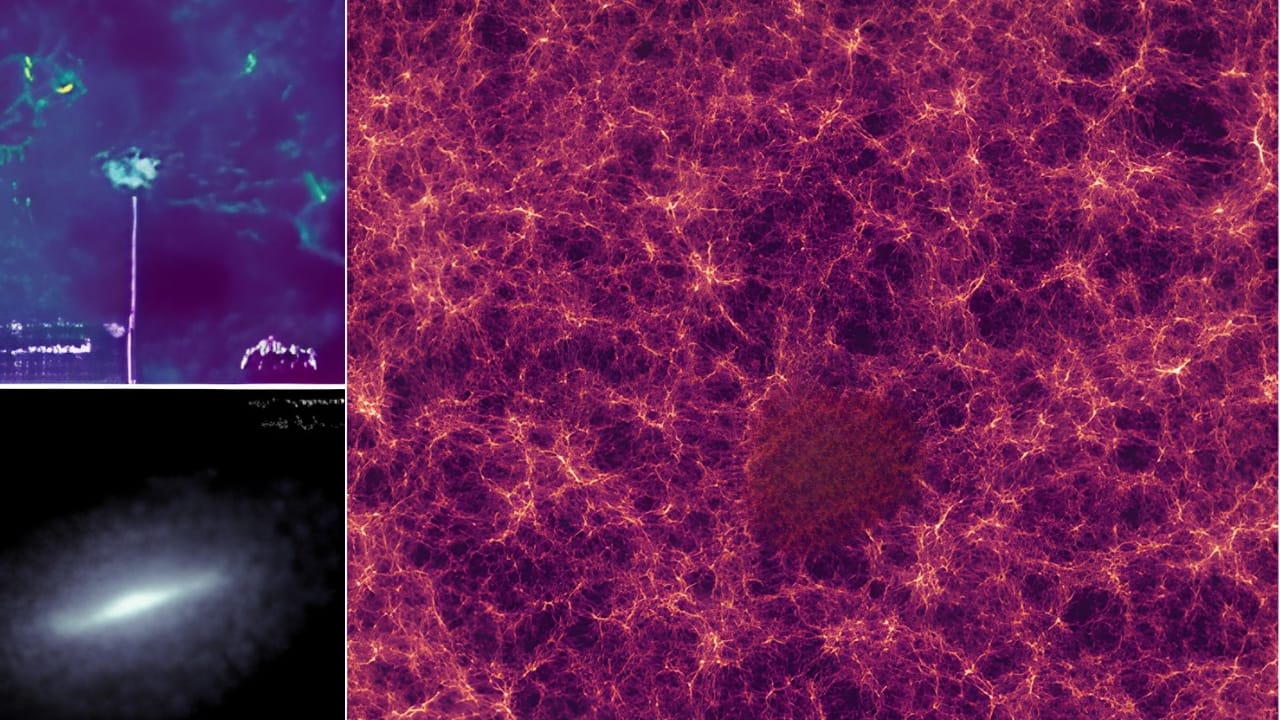
Physicists from MIT, Harvard and other institutions released the Lumina simulation, a cosmological model of the universe’s first two billion years, using the Frontier supercomputer at Oak Ridge National Laboratory in Tennessee, USA Today reported. Moneycontrol. com reported that the simulation runs on more than 15,000 GPUs and follows cosmic evolution from 45 million to two billion years after the Big Bang to help interpret data from the James Webb Space Telescope and the Roman Space Telescope. CNET noted that the model covers a 1.

5-billion-light-year cube and simulates hydrogen and helium reionization during that epoch. The New York Post said the Lumina model visualizes the early formation of galaxies and black holes for comparison with JWST observations. Mirage News added that the effort aims to test theoretical predictions against upcoming telescope data.

参与者

Center for Astrophysics | Harvard & Smithsonian Oliver Zier Aaron Smith Oak Ridge National Laboratory Frontier supercomputer

地点

Cambridge, Massachusetts, United States Oak Ridge, Tennessee, United States Dallas, Texas, United States

文章

2026年十月27日
3 篇总计
Watch 2 billion years of cosmic evolution in new universe simulation

USA Today • 10月27日 17:13

Physicists from MIT, Harvard and other institutions released the Lumina simulation, which models the universe from the end of the cosmic dark age to the formation of early galaxies across a volume 100 times larger than previous efforts.

可信度 78% 操纵 8% 中立
New supercomputer simulation reveals how the universe formed

Yahoo • 10月27日 15:00

A collaboration between the Smithsonian Astrophysical Observatory and Harvard College Observatory has produced the Lumina simulation, modeling the universe's first two billion years with unprecedented scale and detail.

可信度 68% 操纵 9% 中立
What is Lumina? Smithsonian scientists use 15,000 GPUs to model universe’s first 2 billion years after the big bang

Moneycontrol.com • 10月27日 11:35

The Lumina simulation, run on over 15,000 GPUs at Oak Ridge's Frontier supercomputer, tracks cosmic evolution from 45 million to two billion years after the Big Bang, aiding interpretation of data from JWST and the Roman Space Telescope.

可信度 72% 操纵 7% 中立
2026年十月26日
4 篇总计
This New Simulation of the Early Universe Is Massive, Detailed and Gorgeous

CNET • 10月26日 19:34

Researchers at the Center for Astrophysics have used the Frontier supercomputer to run the Lumina simulation, covering a 1.5-billion-light-year cube and modeling hydrogen and helium reionization for the first two billion years after the Big Bang.

可信度 78% 操纵 8% 中立
Simulation shows how universe formed in stunning detail: new reserach

New York Post • 10月26日 14:17

The Lumina model, created by the Center for Astrophysics using a supercomputer, visualizes the early formation of galaxies and black holes and will be compared with observations from the James Webb Space Telescope.

可信度 72% 操纵 9% 中立
Smithsonian creates early universe simulation

Innovation News Network • 10月26日 10:05

Scientists at the Harvard & Smithsonian Center for Astrophysics have created "Lumina," the most detailed early-universe simulation to date, incorporating data from the James Webb and Nancy Roman Space Telescopes.

可信度 71% 操纵 9% 中立
Smithsonian Scientists Create Detailed Early Universe Simulation

Mirage News • 10月26日 00:40

Researchers at the Center for Astrophysics have unveiled "Lumina," a detailed cosmological simulation covering the first two billion years of the universe, aimed at testing theories against observations from JWST and the Roman telescope.

可信度 78% 操纵 8% 中立