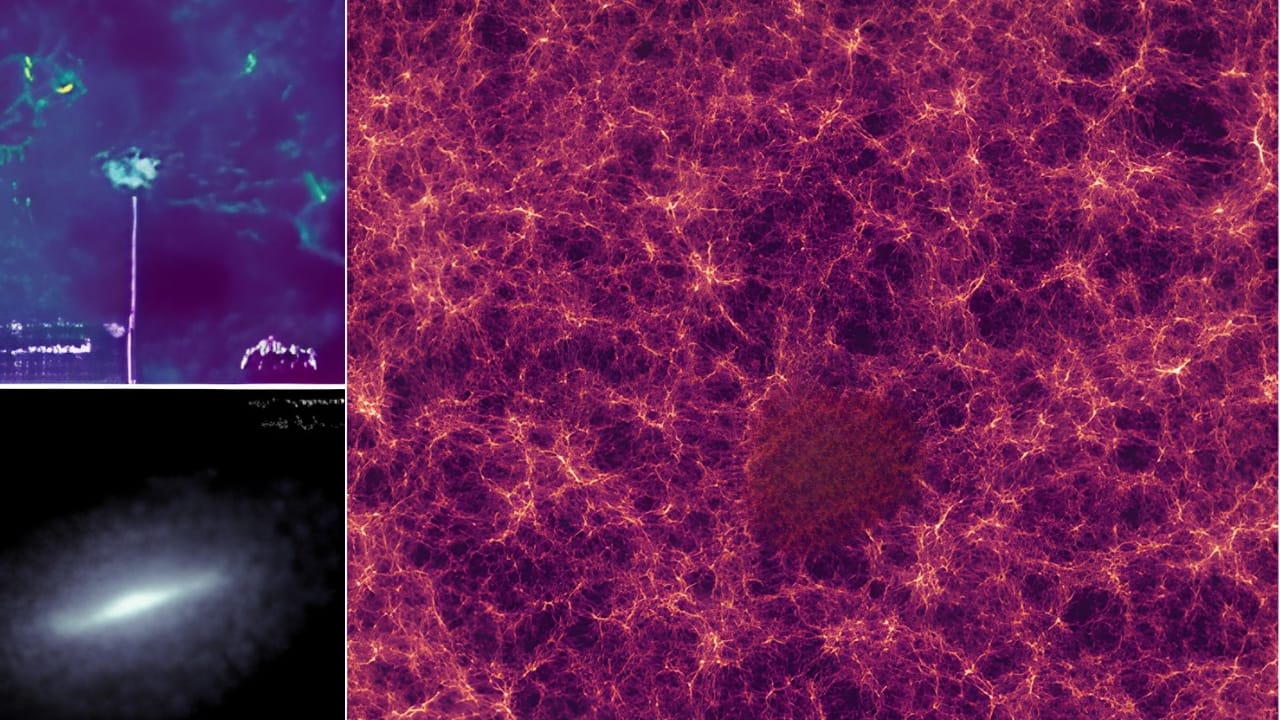
Lumina Simulation Released, Modeling First Two Billion Years of Cosmos


Physicists from MIT, Harvard and other institutions released the Lumina simulation, a cosmological model of the universe’s first two billion years, using the Frontier supercomputer at Oak Ridge National Laboratory in Tennessee, USA Today reported. Moneycontrol. com reported that the simulation runs on more than 15,000 GPUs and follows cosmic evolution from 45 million to two billion years after the Big Bang to help interpret data from the James Webb Space Telescope and the Roman Space Telescope. CNET noted that the model covers a 1.
5-billion-light-year cube and simulates hydrogen and helium reionization during that epoch. The New York Post said the Lumina model visualizes the early formation of galaxies and black holes for comparison with JWST observations. Mirage News added that the effort aims to test theoretical predictions against upcoming telescope data.