JWST identifies candidate black-hole star from early universe

JWST identifies candidate black-hole star from early universe

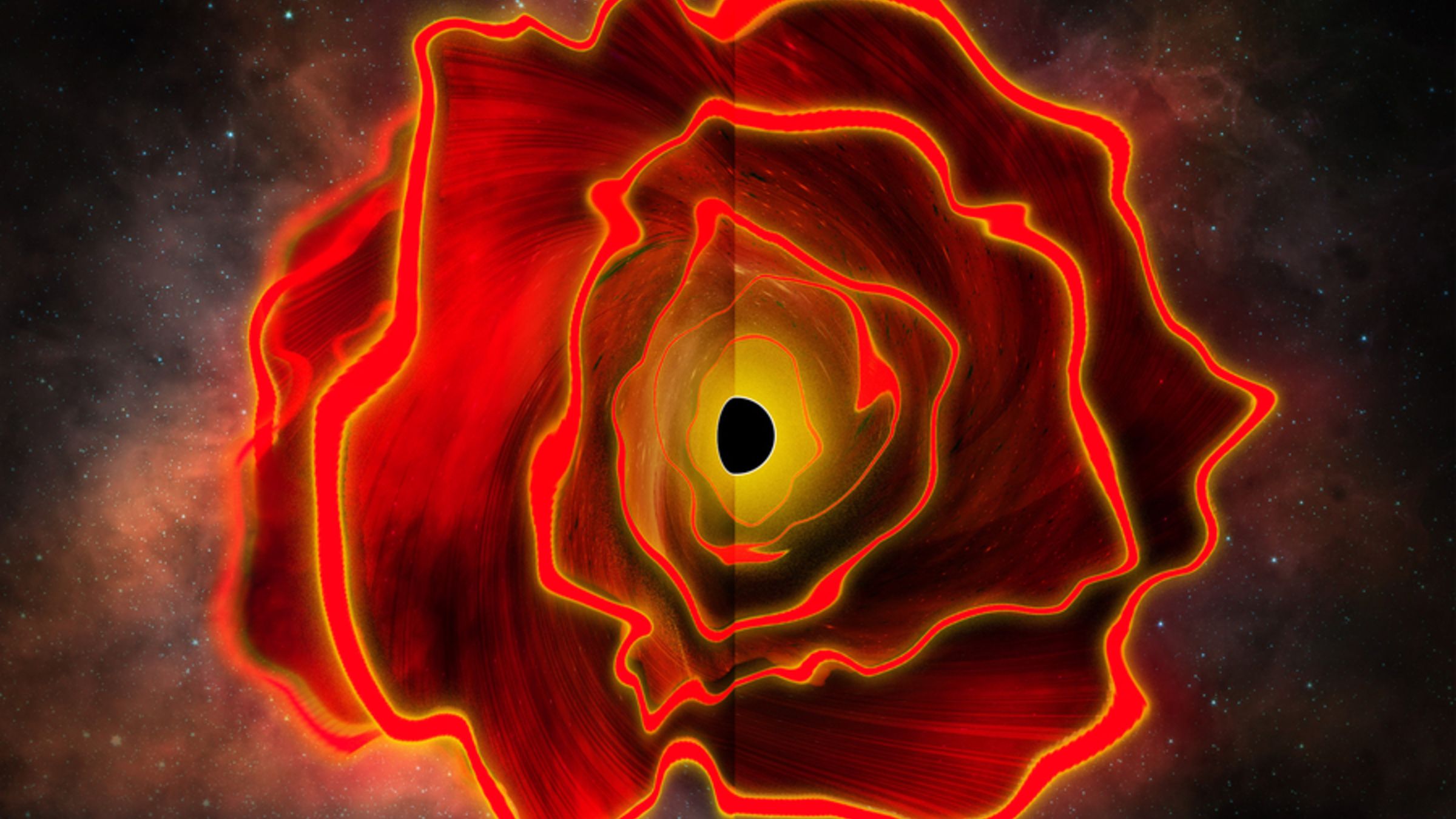
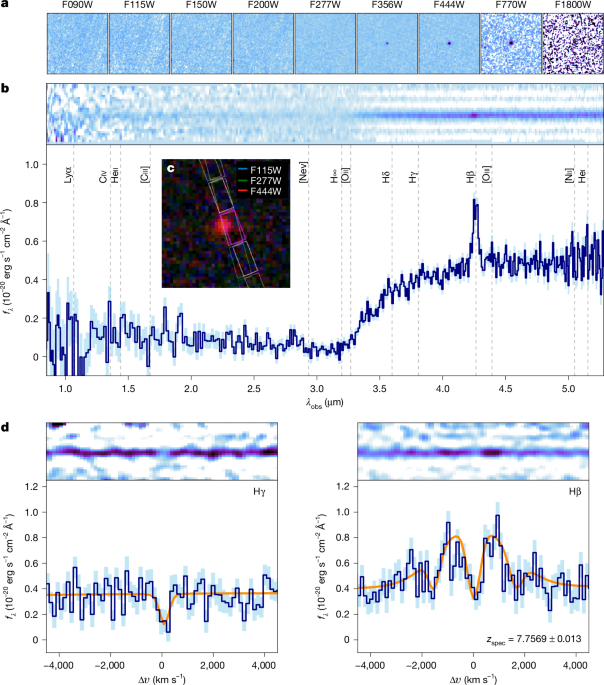
Astronomers using the James Webb Space Telescope said they have identified a solar-system-sized object that existed 660 million years after the Big Bang and may represent a new class of “black-hole star.” Earlier reports described the source, dubbed MoM-BH*-1, as a massive black hole surrounded by an extremely dense, dust-free gas cloud, based on spectroscopic data that showed an extreme Balmer break. The team, including researchers from the University of Hawaii and MIT, noted that the object’s unusually bright emission could explain the previously observed “little red dots” in early-universe surveys.

Acteurs

Rohan Naidu Robert Simcoe University of Hawaii Massachusetts Institute of Technology (MIT) James Webb Space Telescope Nature

Lieux

University of Hawaii, Hawaii, United States Massachusetts Institute of Technology, Cambridge, Massachusetts, United States

Articles

20 août 2026
2 au total
Black hole star? Solar-system-size 'dot' from the early universe is our best evidence yet of a brand-new type of cosmic object

Yahoo • 20 août 15h25

Astronomers using the James Webb Space Telescope have identified a red, ultra-bright source from 660 million years after the Big Bang that could represent a new class of object—a black-hole star—surrounded by a dense gas envelope.

Crédibilité 72% Manip. 9% Centre
Black hole star? Solar-system-size 'dot' from the early universe is our best evidence yet of a brand-new type of cosmic object

Live Science • 20 août 15h25

Astronomers using the James Webb Space Telescope have identified a solar-system-sized object 660 million years after the Big Bang that may represent a new class of “black hole star,” offering clues to the nature of the previously mysterious “little red dots.”

Crédibilité 72% Manip. 8% Centre
17 août 2026
2 au total
James Webb Space Telescope Discovers New Type Of Star Powered By Black Holes Instead Of Fusion

Yahoo • 17 août 18h25

Astronomers using the James Webb Space Telescope have identified a previously unknown type of luminous object, dubbed a “black-hole star,” in which a massive black hole is enveloped by a dense gas cloud that emits intense radiation.

Crédibilité 55% Manip. 30% Centre
James Webb Space Telescope Discovers New Type Of Star Powered By Black Holes Instead Of Fusion

Jalopnik • 17 août 18h25

Researchers analyzing James Webb Space Telescope data have identified a previously unknown type of celestial object—a dense gas cloud surrounding a massive black hole that emits light far brighter than typical stars.

Crédibilité 65% Manip. 25% Centre
14 août 2026
1 au total
Astronomers Discover an Entirely New Type of Object: a “Black Hole Star”

Yahoo • 14 août 19h40

Astronomers using the James Webb Space Telescope have identified a massive object, MoM-BH*-1, that appears to be a black hole surrounded by a dense gas envelope, representing a previously hypothesized class of “black hole stars.”

Crédibilité 78% Manip. 8% Centre
13 août 2026
1 au total
Astronomers find 'one in a billion' black hole-star: new research

New York Post • 13 août 17h39

A team using the James Webb Space Telescope discovered an object that appears to combine a massive black hole with a star-sized gas cloud, offering new clues about early cosmic structures.

Crédibilité 68% Manip. 30% Centre
12 août 2026
2 au total
Newly discovered "black hole star" could solve mystery of strange red dots spotted in the early universe

CBS News • 12 août 16h42

A team using the James Webb Space Telescope discovered an object the size of the solar system that emits energy far beyond typical stars, suggesting a black hole surrounded by gas, potentially explaining previously observed red dots.

Crédibilité 78% Manip. 8% Centre
A gas-enshrouded and gas-reddened black hole at cosmic dawn

Nature • 12 août 15h06

Spectroscopic observations with JWST reveal a compact source 660 million years after the Big Bang whose spectrum is best explained by a supermassive black hole surrounded by extremely dense, dust-free gas, offering a possible view of early black-hole growth.

Crédibilité 72% Manip. 7% Centre