Australian scientists chemically confirm dinosaur blood in 115-million-year-old fossil

Australian scientists chemically confirm dinosaur blood in 115-million-year-old fossil

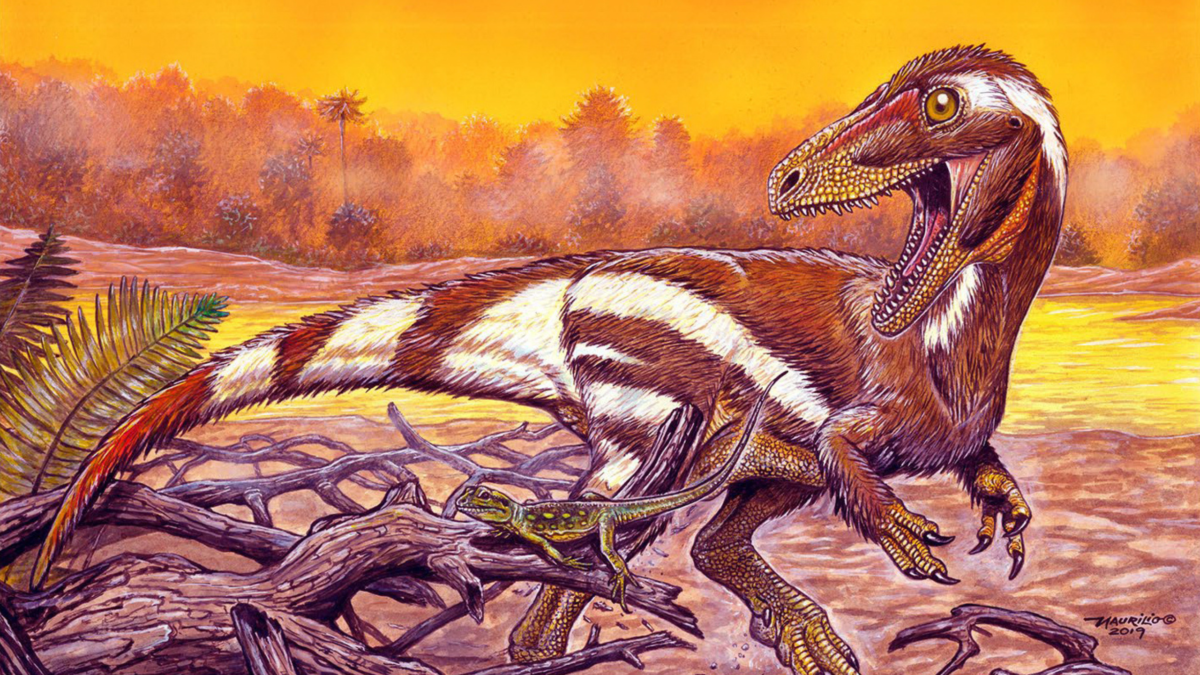
Researchers from Curtin University in Australia chemically confirmed dinosaur blood by detecting haemoglobin-derived molecules in a Brazilian theropod leg bone. Earlier, the team had reported cell-like structures and heme molecules in the same fossil, suggesting preservation of blood components for over 100 million years, though some experts expressed skepticism. The recent confirmation builds on those initial observations, providing the first direct chemical proof that dinosaur blood can survive in fossilized form.

Acteurs

Curtin University Kliti Grice

Lieux

Australia Brazil
Articles

3 novembre 2026
6 au total
Shades of Jurassic Park after Australian dinosaur find

InDaily South Australia • 03 nov. 23h34

Researchers led by Curtin University have identified haemoglobin-derived molecules in a Brazilian theropod fossil, marking the first chemical proof of dinosaur blood.

Crédibilité 82% Manip. 8% Centre
Scientists Find Dinosaur Blood and Cells For First Time in Fossil

Nerdist • 03 nov. 19h50

An international team led by Curtin University reports the first chemical confirmation of mineralized red blood cells and heme molecules in a Brazilian dinosaur fossil dating back 115 million years.

Crédibilité 82% Manip. 12% Centre
Fossilized dinosaur blood detected for first time: study

New York Post • 03 nov. 14h42

Scientists have chemically identified preserved blood cells and heme in a juvenile theropod fossil from Brazil, challenging assumptions about the longevity of biomolecules.

Crédibilité 88% Manip. 12% Centre
Scientists find traces of red blood cells in a dinosaur fossil

CNN • 03 nov. 14h09

Researchers claim to have identified microscopic structures and heme molecules resembling red blood cells in a Cretaceous dinosaur fossil, though some experts remain skeptical.

Crédibilité 88% Manip. 8% Centre
Melbourne Cup 2026: Nearly 12,000 descend on Ascot Racecourse as WA punter turns $2 into thousands of dollars

The West Australian • 03 nov. 07h26

Scientists from Curtin University say they have identified preserved red blood cells inside fossilised dinosaur bones, calling it a landmark finding.

Crédibilité 68% Manip. 12% Centre
Dinosaur blood discovery by Curtin University researchers unlocks pre-historic insights

The West Australian • 03 nov. 05h55

Scientists from Curtin University say they have identified preserved red blood cells inside fossilised dinosaur bones, calling it a landmark finding.

Crédibilité 68% Manip. 12% Centre
2 novembre 2026
1 au total
Dinosaur Blood Cells Detected in 115-Million-Year-Old Fossil

ScienceAlert • 02 nov. 20h02

Researchers from Curtin University report the detection of cell-like structures and heme molecules in a Brazilian theropod leg bone, suggesting preservation of dinosaur blood components for over 100 million years.

Crédibilité 82% Manip. 8% Centre