300-Million-Year-Old Fossil Identified as Nautilus Ancestor


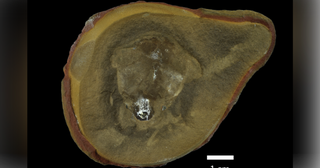
Researchers from the University of Reading and the Field Museum of Natural History in Chicago reanalyzed the 300-million-year-old fossil Pohlsepia mazonensis, which was previously thought to be the world's oldest octopus. Using advanced imaging techniques, they discovered that the fossil is not an octopus but rather a relative of modern nautiluses, a group of shelled cephalopods. This reclassification alters the evolutionary timeline of cephalopods by pushing back the known existence of nautiloid relatives.
The findings, involving experts such as Dr. Thomas Clements and Paul Mayer, highlight the importance of modern technology in paleontology and provide new insights into the diversity and evolution of ancient marine life in what is now Illinois, United States.