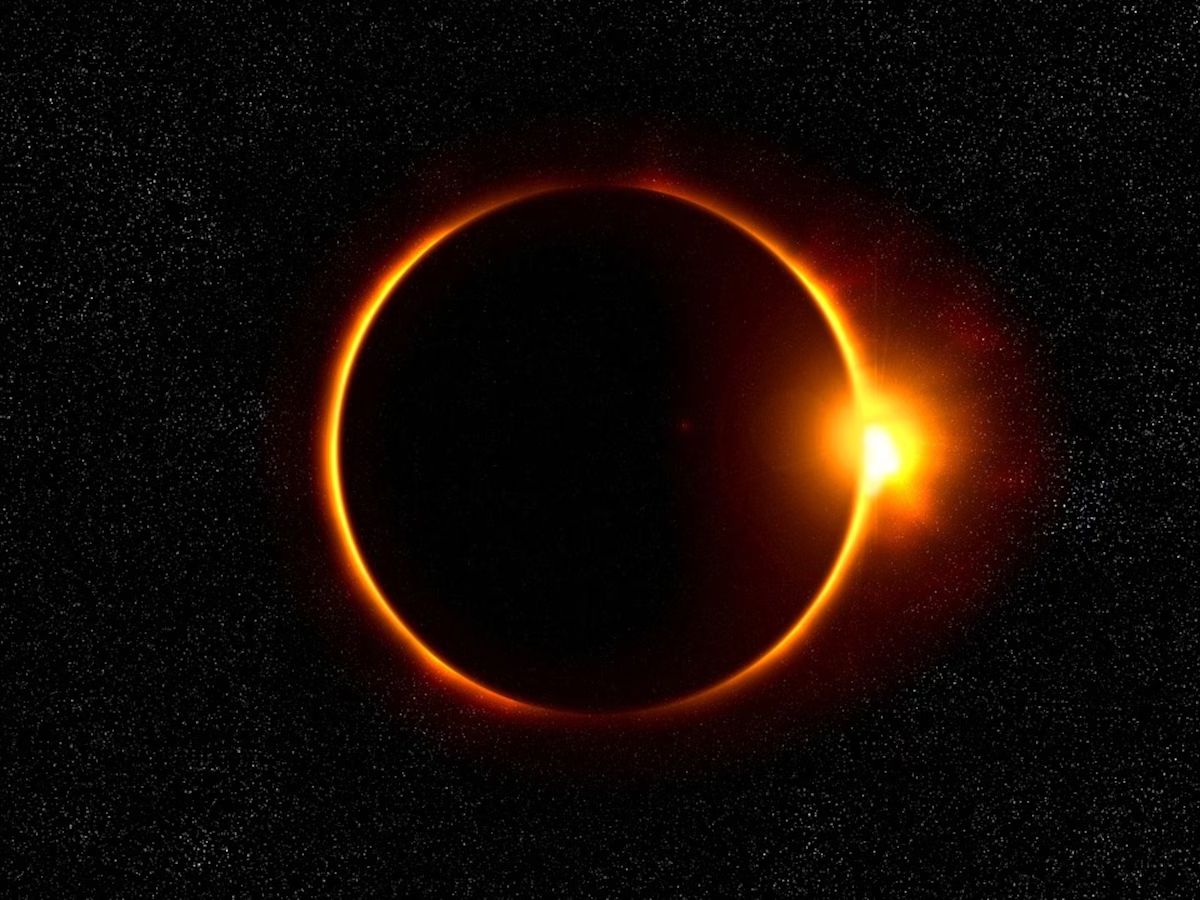
Satellite Captures 'Ring of Fire' Solar Eclipse Over Antarctica

Satellite Captures 'Ring of Fire' Solar Eclipse Over Antarctica

On February 17, 2026, an annular solar eclipse occurred, primarily visible over Antarctica. During this eclipse, the Moon obscured approximately 96% of the Sun, creating a 'ring of fire' effect where a bright ring of sunlight remained visible around the Moon's silhouette. This phenomenon was captured by South Korea's GEO-KOMPSAT-2A satellite, which recorded the event over the remote ice sheets of Antarctica.

Partial phases of the eclipse were visible in parts of southern South America and southeastern Africa, including countries such as South Africa, Mozambique, and Madagascar. The eclipse was a rare astronomical event mainly observable from Antarctica, with limited visibility in surrounding southern regions.

The event attracted interest from astronomers and eclipse enthusiasts worldwide due to its distinctive appearance and geographic visibility.


Acteurs

Aucun enregistrement

Lieux

Antarctica South Africa Mozambique Madagascar southern tip of South America

Articles

18 février 2026
1 au total
Watch: Satellite captures annular solar eclipse turning Antarctic day into night

India Today • 18 fév. 05h44

On February 17, 2026, South Korea's GEO-KOMPSAT-2A satellite recorded an annular solar eclipse over Antarctica, where the Moon obscured 96% of the Sun, creating a 'ring of fire' visible only over remote ice sheets.

Crédibilité 90% Manip. 2% Centre
17 février 2026
1 au total
Solar eclipse today: When, where and how to observe safely

NewsBytes • 17 fév. 05h10

An annular solar eclipse on February 17, 2026, was primarily visible over Antarctica, with partial visibility in parts of southern South America and southeastern Africa.

Crédibilité 90% Manip. 0% Centre
16 février 2026
2 au total
Solar eclipse 2026: An eclipse will happen on Tuesday, but few will see it

Mashable • 16 fév. 17h28

An annular solar eclipse will occur on February 17, 2026, visible primarily from Antarctica, with partial views in parts of southern Africa and South America.

Crédibilité 85% Manip. 5% Centre
What time is the annular solar eclipse on Feb. 17?

Space • 16 fév. 11h00

An annular solar eclipse will occur on February 17, 2026, visible primarily from Antarctica, with partial visibility in parts of southern Africa and South America.

Crédibilité 95% Manip. 0% Centre
15 février 2026
1 au total
Solar Eclipse 2026: Antarctica to Witness Rare ‘Ring of Fire’ in February - Check Date, Time, Visibility & India Details

The Sunday Guardian • 15 fév. 15h52

An annular solar eclipse will occur on February 17, 2026, visible primarily from Antarctica, with partial views in parts of southern Africa and South America.

Crédibilité 85% Manip. 0% Centre
12 février 2026
1 au total
Annual solar eclipse on February 17: Will it be visible in India? Check time and details

Hindustan Times • 12 fév. 11h24

An annular solar eclipse, known as a 'ring of fire,' will occur on February 17, 2026, primarily visible from Antarctica, with partial phases observable in parts of southern Africa and South America.

Crédibilité 90% Manip. 0% Centre